Joint Care for a Large Dog
November 4, 2026
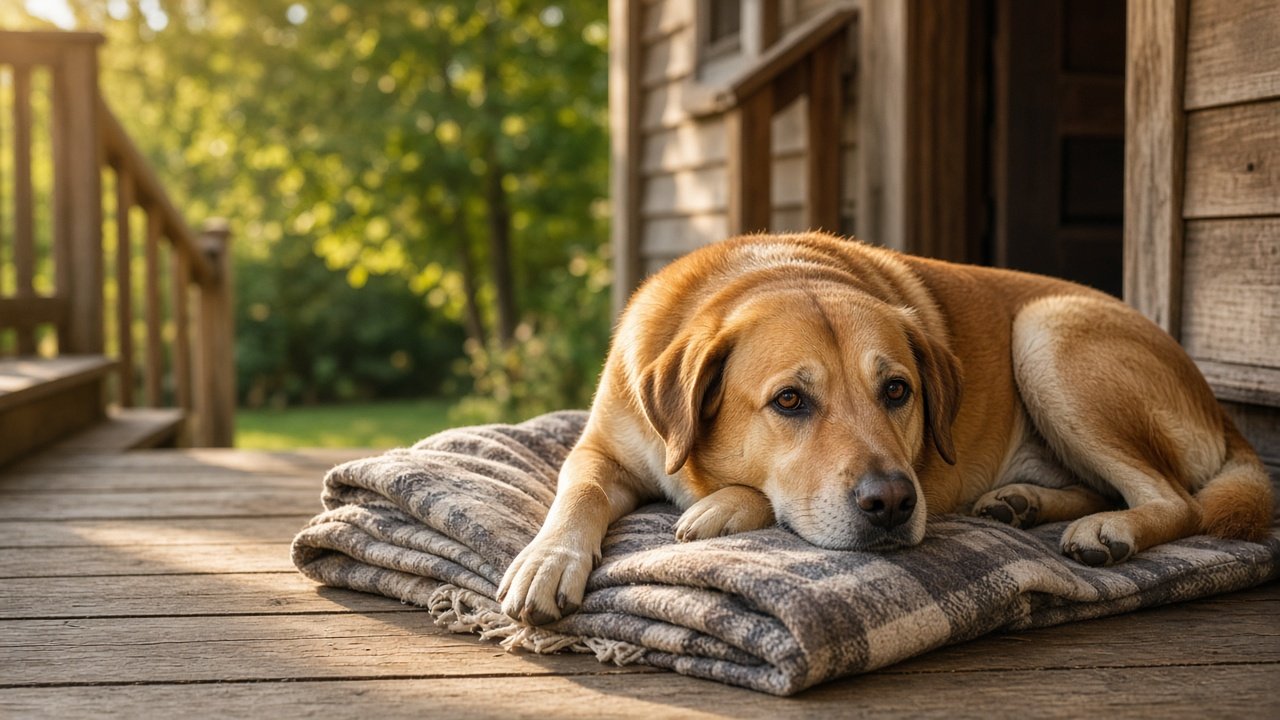
A large dog carries more weight on each joint than a small one does. The care that matters most is ordinary: keep the dog lean, add exercise slowly, and call the veterinarian when the gait changes. You do not need a special aisle of products to start.
What extra weight does
Obesity stresses bones, joints, and muscles, and it is the most common way extra fat worsens arthritis. Fat tissue also releases inflammatory signals that can feed the process over time. Extra weight makes anesthesia riskier, because it loads the lungs and the work of breathing.
Cornell University's veterinary college uses a body condition score from 1 to 9. A 4 or a 5 is the aim. At that score you can feel the ribs and you cannot see them. From the side the belly tucks up. From above the waist tucks in. Each step away from ideal is about 10 percent of the dog's current weight. A dog scored 7 is about 20 percent over the weight it should carry. Ask your veterinarian to score your dog rather than guessing from a photograph.
Weight loss, when it is needed, is slow on purpose. Cornell says a dog on a plan can safely lose about 1 to 2 percent of body weight in a week. Faster than that can mean the calories were cut too hard, or that something else is wrong. Slower than that means the plan needs a change. Weigh at least every two weeks. Walking helps keep muscle and joint motion, but activity alone will not replace a change in food. Low-impact work, a walk or a swim, is the kind that belongs in a joint plan.
Puppies who will be large
Hip dysplasia is a common inherited looseness of the hip. It shows up often in medium and large breeds. Over time the loose joint develops arthritis. Some dogs show little early on. Others are uncomfortable at a few months, or only later, when arthritis has had time to build.
The feeding mistake in a fast-growing large puppy is too much food, and extra calcium or vitamin D on top of an already complete diet. Cornell's guidance is to use a diet made for large-breed growth and to skip those add-on minerals. A lean puppy is not a deprived puppy. It is a puppy whose joints are not being asked to finish growing under a surplus.
How the dog tells you
These are reasons to call the clinic, not a list you diagnose at home:
- Trouble getting up - A bunny-hop when running, both back legs moving together - Limping or stiffness in the back legs - Less interest in play, or a refusal to jump - Thinner muscle over the hips and thighs - A sway through the hips - More weight shifted onto the front legs
Many dogs with hip trouble live well with a plan built by a veterinarian. That plan may include weight control, pain medicine that needs bloodwork, and low-impact exercise such as walking and swimming. Medicine and any supplement are the clinic's decision. Do not start a pain drug from a shelf because a neighbor's dog used one.
Exercise that adds up
Lengthen the daily walk by about 10 percent a week, not by doubling Saturday. Watch the dog. Hard panting, or a dog who is trying to slow you down, means stop. Then talk with your veterinarian before you push the distance again. A dog who has been on the couch does not get a sudden hour of fetch. The same slow start protects a dog coming back from a layoff. Swimming and steady walking keep joints moving without the pounding of repeated jumps.
Stop the session while the dog still looks willing. Soreness often shows up the next morning as a slower rise from the bed, not as a dramatic limp on the trail. If that morning stiffness is new, shorten the next outing and make the call.
The visit, and what it can include
Cornell describes medical care for a painful hip as the same family of steps used for arthritis in any major joint. Weight comes first. A veterinarian may add a nonsteroidal pain medicine, which means bloodwork along the way, or other pain relief. Some dogs are sent for muscle-building work, including exercises a rehabilitation team chooses. A few need surgery. A total hip replacement can return a more normal gait. A femoral head ostectomy, more often considered in dogs under about 40 pounds, usually leaves a smaller range of motion and still good daily function. Those are clinic decisions. Your part before and after any of them is the same: a waist you can see, ribs you can feel, and walks that build instead of spike.
Dogs with hip dysplasia should not be bred. The looseness is inherited, and passing it on is how the next large litter starts the same story.
What you can do this week
Look at the dog from above and from the side. Feel the ribs. If you cannot find them without pressing, talk to your veterinarian before you cut food on your own. Measure this week's walks, then add a little, not a lot. Put a rug where the dog turns on a bare floor. And if the hop, the limp, or the slow rise is already there, book the visit. Joint care for a large dog is mostly the weight you do not add and the miles you add slowly.
Sources
- https://www.vet.cornell.edu/departments-centers-and-institutes/riney-canine-health-center/canine-health-topics/canine-hip-dysplasia-chd
- https://www.vet.cornell.edu/departments-centers-and-institutes/riney-canine-health-center/canine-health-topics/obesity-and-weight-loss-dogs
- https://www.vet.cornell.edu/departments-centers-and-institutes/riney-canine-health-center/canine-health-topics/obesity-and-weight-management-tips