The Serum Run, and the Dog Who Was Not Balto
November 2, 2026
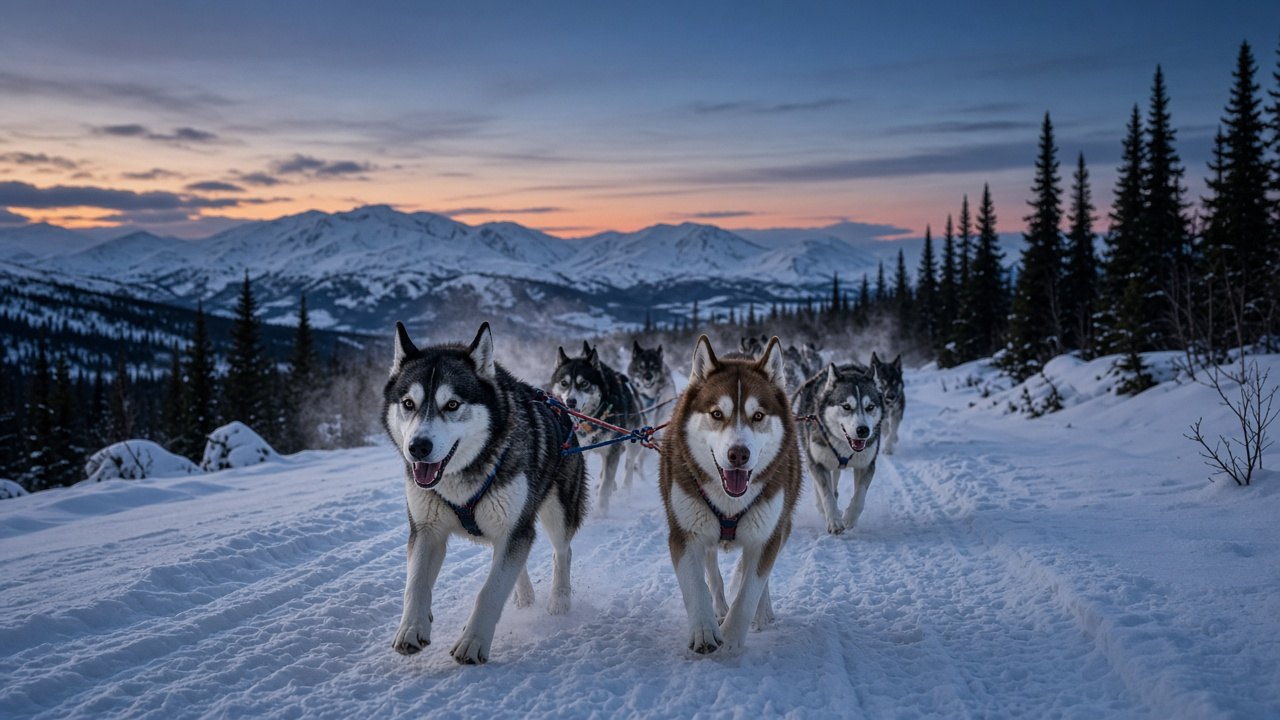
Nome's only doctor, Curtis Welch, had a problem of inventory before he had a problem of heroism. The Alaska State Archives and the National Park Service agree on the shape of it. The port on the southern shore of the Seward Peninsula is icebound from late autumn into summer. Welch, at the 25-bed Maynard Columbus Hospital, found that his diphtheria antitoxin had expired, and the replacement did not arrive before the last ship. Children he first treated as tonsillitis cases grew in number. Four died. He was looking at diphtheria in a town the Park Service counts, for that winter, at 455 Alaska Native residents and 975 settlers of European descent, with no road and no open water.
Airplanes were the modern answer, and they were not an answer yet. The National Endowment for the Humanities' account of the argument is right there in the title: dog versus airplane. The machines on hand could not be trusted in an Alaskan January. What could be trusted, because people already used it, was a relay of sled teams along the trail from the railhead at Nenana. The Archives put the distance at 674 miles. Twenty mushers and about 150 dogs carried the serum in 127 and a half hours. Not one vial broke. The usual trip took most of a month. This one took about five and a half days, through gale winds, whiteouts, and cold the Cleveland Museum of Natural History's centennial note puts, on the worst of it, in the range that stops thought.
The relay was a chain, not a single dash, which is why the famous dog is the wrong famous dog. Each team was meant to hold the package for a leg and hand it on. "Wild Bill" Shannon took the first 52 miles. Leonhard Seppala, a Norwegian musher in Nome who had won the All-Alaska Sweepstakes three times, was sent east with his lead dog Togo to meet the serum and bring it home. The Park Service says Togo was 12, a Siberian husky Seppala had nearly given away as a puppy because of a throat ailment, who escaped his new home through a window and then, on his first day in harness, ran more than 75 miles. By 1925 he was the dog Seppala trusted when the ice was a guess.
Seppala's team covered the longest and worst of it. Wikipedia's synthesis of the run, the Park Service, and the Cleveland Museum agree on the mileage that matters: Togo's team ran about 261 miles, counting the trip out to the intercept and the trip back, including the shortcut across the frozen Norton Sound. Balto's team, with Gunnar Kaasen, ran the last 53 to 55 miles into Nome and arrived in the early morning of February 2, 1925. Balto was one of Seppala's backup dogs. Seppala had thought the stockier animal better for freight than for a racing lead. Kaasen later reported that Balto stopped the team on the Topkok River where the ice had failed, which kept the sled out of the water. That is a real act. It is not the whole relay. The serum was already most of the way to Nome before Balto's name was the one a newspaper could print in a single headline.
Radio and papers needed a single animal. Balto stood in for 150. His statue went up in Central Park and another in Anchorage. Togo, who had led the sound crossing and, by the Museum's account, got the team off the ice about three hours before it broke, retired to Maine and died at 16. Seppala had the body mounted. The mount is now at the Iditarod headquarters museum in Wasilla, after students in Alaska campaigned to bring it back. Yale's Peabody Museum keeps the skeleton. In 1960 Seppala said he never had a better dog than Togo. The sentence is not a correction offered by a historian. It is the musher, late, ranking his own dogs.
The Iditarod race, restarted decades later, commemorates the trail and borrows the serum run's glamour. The Archives are careful: the race remembers the route. The 1925 trip was not a race. It was a handoff, organized because a town was out of medicine and the ice had closed the harbor. The dogs were working animals on a trail that already existed. What was new was the speed of the handoffs and the attention, which arrived by the new medium and stuck to the last dog in the line.
A large dog in a modern apartment is not a sled dog, and this story is not an argument that he should be asked to imitate one. It is a record of what a team of dogs did when there was no other vehicle, and of how fame chose the dog the cameras met at the end. If you are going to tell it to a child who has seen the cartoon, tell the miles. Togo's were longer. The vials arrived whole. Welch had a usable antitoxin because twenty people and a great many dogs treated a winter trail as a road.
The handoff is the part the statue cannot show. A musher did not own the serum and did not decide the route. He took a package that was already late, ran the leg he knew in weather that made the next team glad to see him, and gave it up. Shannon's opening miles and Kaasen's closing miles are the ends of a sentence whose middle is Seppala, Togo, and the Norton Sound. Leave the middle out and the story becomes a mascot. Put the middle back and it becomes a timetable. Nome's outbreak did not care which dog the papers could spell. It cared that the antitoxin was still a liquid when it reached the hospital, which the Archives say it was. That is the result worth the names.
Sources
- https://www.nps.gov/people/togo.htm
- https://archives.alaska.gov/education/serum.html
- https://www.cmnh.org/learn/science-blog/2025/01/23/100-years-after-the-great-serum-run-baltos-legacy-endures
- https://www.neh.gov/humanities/2013/novemberdecember/feature/dog-vs-airplane
- https://en.wikipedia.org/wiki/1925_serum_run_to_Nome